LoRa® Powered IoT Tracking Brings Real-Time Visibility to Air Cargo's Most Critical Asset
Quick Facts
Company
SkyCell AG
Customer Profile
SkyCell is a Swiss pharma supply chain technology company redefining risk management in pharma logistics to protect shipments worldwide. It operates the largest IoT gateway network in air cargo, spanning 250+ airports.
Objectives
- Replace manual Unit Load Device(ULD) tracking with real-time visibility, eliminating missing and misallocated ULDs across global airports.
- Provide seamless indoor and outdoor tracking coverage without dependence on cellular networks.
- Deploy a globally operable, battery-powered tracker with multi-year operational life.
- Flag emerging risks early so stakeholders can intervene before a shipment is compromised.
Results
- Over 100,000 ULDs tracked globally across 250+ airports
- Real-time location updates every 1 hour while moving, every 6 hours while stationary
- Up to 10-year battery life per device, dramatically reducing maintenance overhead at scale
- Single airport coverage achieved with just 5–10 LoRa gateways
- Full indoor and outdoor tracking continuity through a hybrid LoRa and BLE architecture
- DO-160, ISO 27001, ISO 9001, GAMP5, FDA 21 CFR certified meeting the highest aviation and pharmaceutical industry standards
Products & Services
INTRODUCTION
There are approximately 900,000 ULDs in service worldwide, with a combined value of over US$1 billion. These aluminum pallets and containers are the backbone of air cargo operations, every shipment depends on having the right ULD, in the right place, at the right time. Yet for decades, tracking them has been one of the industry's most persistent and costly unsolved problems.
At any given time, approximately 5% of ULDs may be missing. Manual tracking systems, control messages, and legacy RFID approaches have proven inadequate at the pace and scale of modern air freight. The result is a constant cycle of lost assets, costly repositioning, and operational disruption that affects airlines, cargo handlers, and ultimately the end customers whose shipments depend on a reliable supply chain.
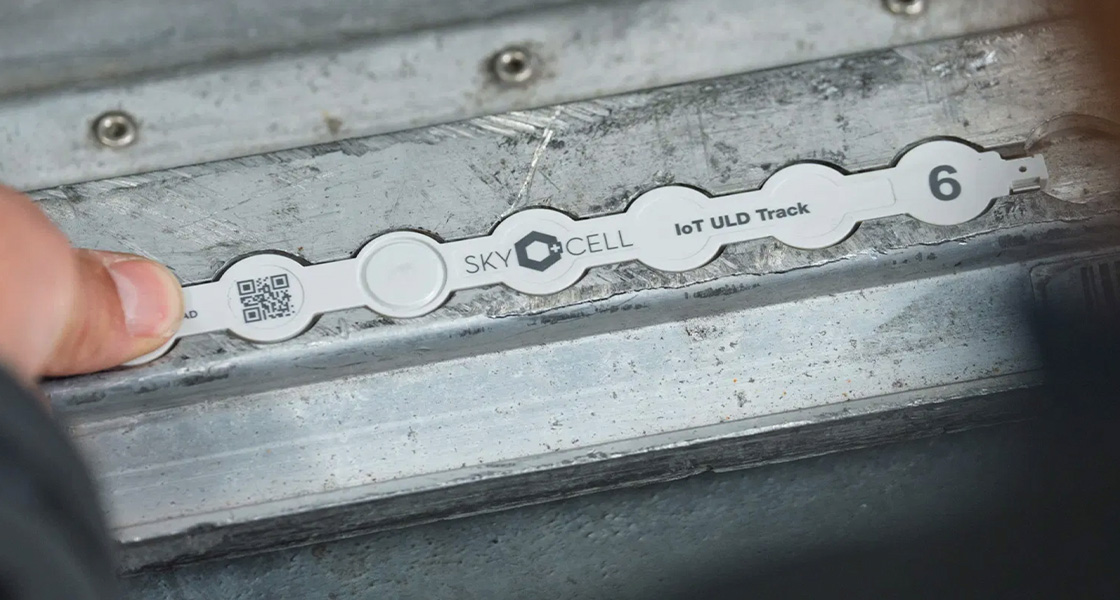
SkyCell AG, a Swiss technology company with over 13 years of experience in air cargo solutions, set out to solve this problem at scale. Their answer is the IoT ULD Track: a slim, ruggedized wireless data logger that mounts directly into the seat track of a ULD pallet and transmits real-time location data using a hybrid of Semtech's LoRa® technology and Bluetooth Low Energy (BLE). Today, SkyCell's solution tracks over 100,000 ULDs across more than 250 airports globally, serving some of the world's leading airlines.
CHALLENGE
Limited visibility into ULD location and status disrupts air cargo operations and leads to costly inefficiencies. The problem manifests in four interconnected ways that compound each other across a global airline operation.
The first challenge is knowing where ULDs are at any given time.
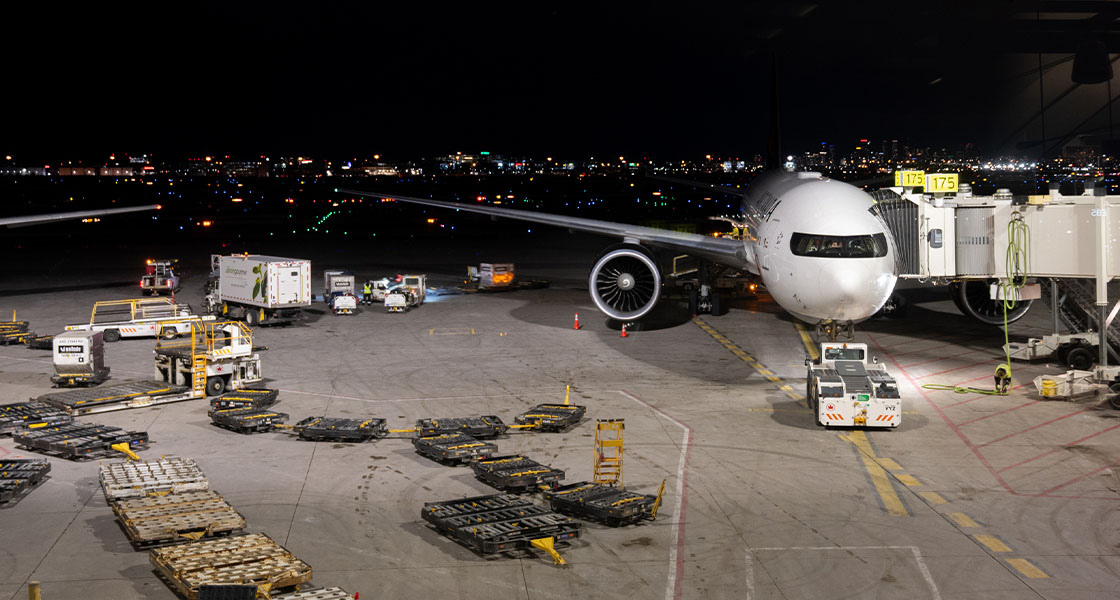
A ULD passes through many hands at an airport including ground crew, cargo handlers, and transport teams, and can end up parked in an unplanned location in the ground handling area. Once inside an aircraft, communication restrictions make it even harder to transmit location data. The result is a constant guessing game about where assets actually are.
The second challenge is keeping ULDs balanced across the network.
Airlines run global routes, and ULDs naturally pile up at some airports while running short at others. Seasonal demand shifts, uneven trade flows, and unexpected disruptions make this worse. When ULD is not where it needs to be, flights get delayed, and staff spend valuable time manually tracing and repositioning assets instead of focusing on operations.
The third challenge is acting on risks before they reach the cargo.
Temperature-sensitive and high-value cargo can sit on the apron or in an unplanned corner of a warehouse while conditions drift. Often the first sign of trouble is a damaged shipment at destination. When an issue does surface, the airline, the handler, and the forwarder chase it by phone and email, each working from a different picture of what happened. By the time everyone agrees on the facts, the window to intervene may already have closed.
The fourth challenge is that previous technologies did not solve the problem.
RFID required expensive infrastructure and never scaled globally. Cellular tracking works, but the per-device subscription cost becomes unsustainable across a fleet of thousands. BLE is low power but short range. Covering a single large airport would require 50 to 100 BLE gateways, making it impractical and expensive. None of these options delivered reliable, cost-effective coverage across the full range of airport environments including open aircraft parking areas, warehouses, hangars, and underground facilities.
Airlines needed a tracking solution that could operate continuously across the full complexity of an airport environment: Indoors, outdoors, on the ground handling area, and in the cargo hold without wires, without cellular dependency, and without the operational burden of frequent battery changes on a fleet of thousands of devices.
SOLUTION
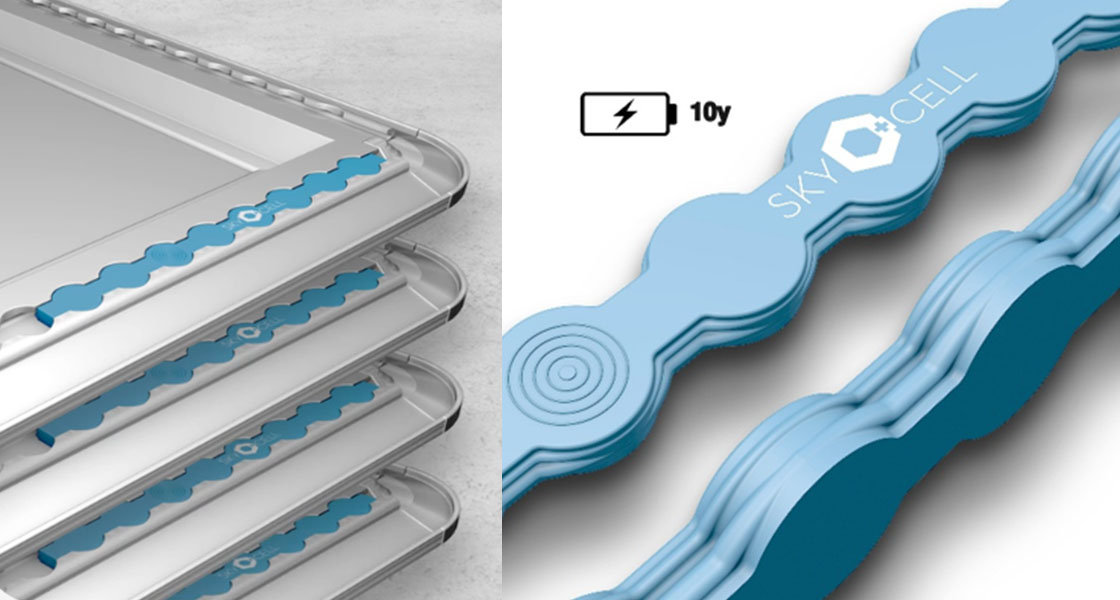
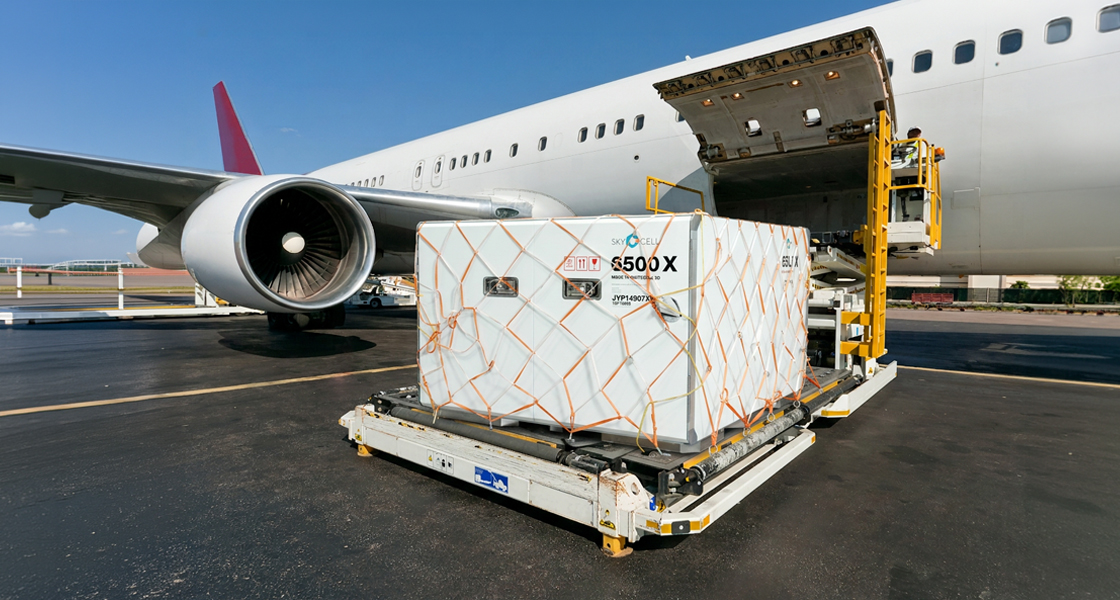
SkyCell developed the IoT ULD Track, a compact device designed to slot directly into the seat track of a ULD pallet, protecting it from the rough handling and forklift operations that characterise daily cargo operations. Installation is effortless, and the device operates continuously from that point without further infrastructure investment at the pallet level.
At the core of the IoT ULD Track is a hybrid connectivity architecture combining Semtech's LoRa® technology on the ISM 2.4GHz band with BLE. SkyCell's ULD tracking solution uses LoRa in the 2.4GHz frequency range, a global and unlicensed band that operates similarly to BLE and Wi-Fi, supporting seamless tracking without state-specific licensing requirements. This is a deliberate design choice. Sub-GHz LoRa frequencies, while offering greater range in some environments, carry geographic restrictions that make them unsuitable for a globally deployed ULD fleet. The 2.4GHz ISM band removes this constraint entirely.
The efficiency advantage of LoRa is substantial at airport scale. LoRa can cover an entire airport with just 5 to 10 gateways. This translates directly into lower infrastructure cost and reduced operational complexity. SkyCell has built the largest IoT gateway network in the industry on this foundation, covering over 250 airports globally.
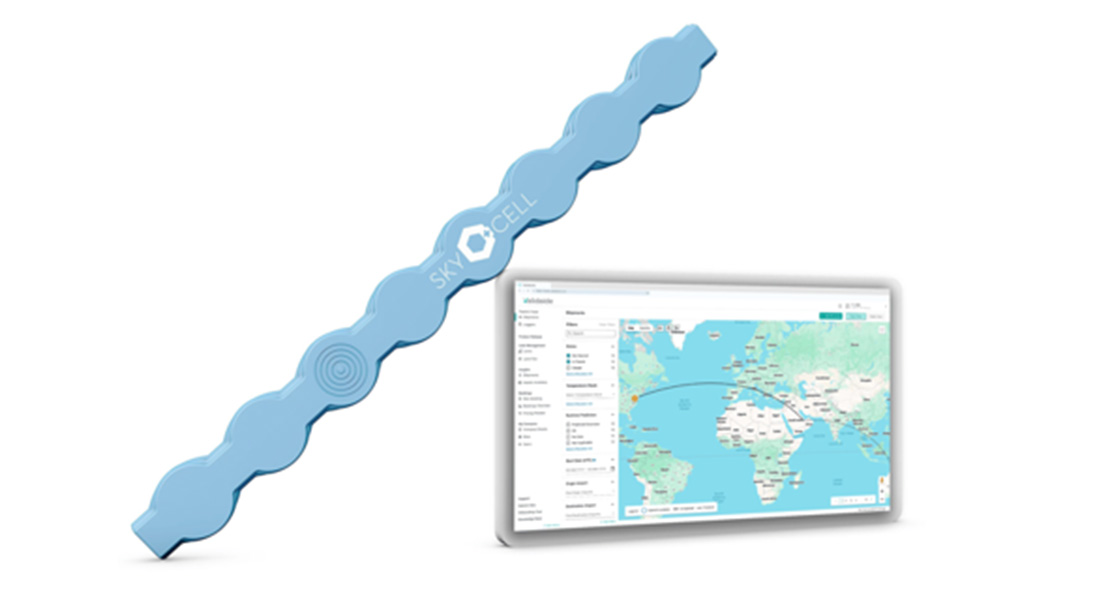
Location and temperature data, are transmitted every hour while the ULD is in motion and every six hours while stationary, feeding live into SkyCell's Asset Tracking platform. From there, airline operations teams access a real-time map of their entire ULD fleet, geofencing alerts, historical utilization data, predictive dispositioning analytics via an AI Control Tower, and seamless integration with existing airline ERP and messaging systems. Predictive alerts flag emerging risks early and teams can collaborate through a shared platform to save shipments. The battery supports up to ten years of continuous operation, a critical design requirement for assets that are impractical to service frequently across a global network.
BENEFITS
- Continuous Visibility Across the Full Airport Environment
The hybrid LoRa and BLE architecture ensures uninterrupted tracking whether a ULD is in the ground handling area, inside a cargo warehouse, in an underground facility, or in transit between airports. This eliminates the blind spots that manual tracking cannot address. - Dramatic Reduction in Gateway Infrastructure Cost
Covering an entire airport with 5 to 10 LoRa gateways compared to 50 to 100 for BLE-only deployments represents a significant reduction in deployment cost and operational complexity, enabling SkyCell to build and maintain the world's largest air cargo IoT network economically. - Fleet Imbalance Reduced
Real-time location data fed into the SkyCell Asset Tracking platform enables airlines to shift from reactive to proactive ULD management. Airlines can anticipate imbalances before they cause delays, reduce costly repositioning, and ensure the right ULD is available at the right airport at the right time. - Early Warnings That Turn Into Action
Readings collected by the IoT ULD Track are gathered by the SkyCell Asset Tracking Platform and used to feed predictive monitoring and analytics. This flags emerging risks early, such as temperature-sensitive cargo left on the apron too long or a ULD stalled at a handover. Airlines and ground handlers can work from a shared view to intervene, with a record of every action for reporting. - Ten-Year Battery Life at Fleet Scale
With up to ten years of operation per device, the IoT ULD Track eliminates the maintenance overhead of frequent battery replacement across large fleets. This was a requirement that ruled out many competing technologies before LoRa made it achievable. - Global Operability Without Licensing Complexity
Operating on the globally unlicensed 2.4GHz ISM band, the IoT ULD Track deploys seamlessly across every market without the regulatory friction that limits sub-GHz solutions in certain regions, making it a truly global solution for a global industry.